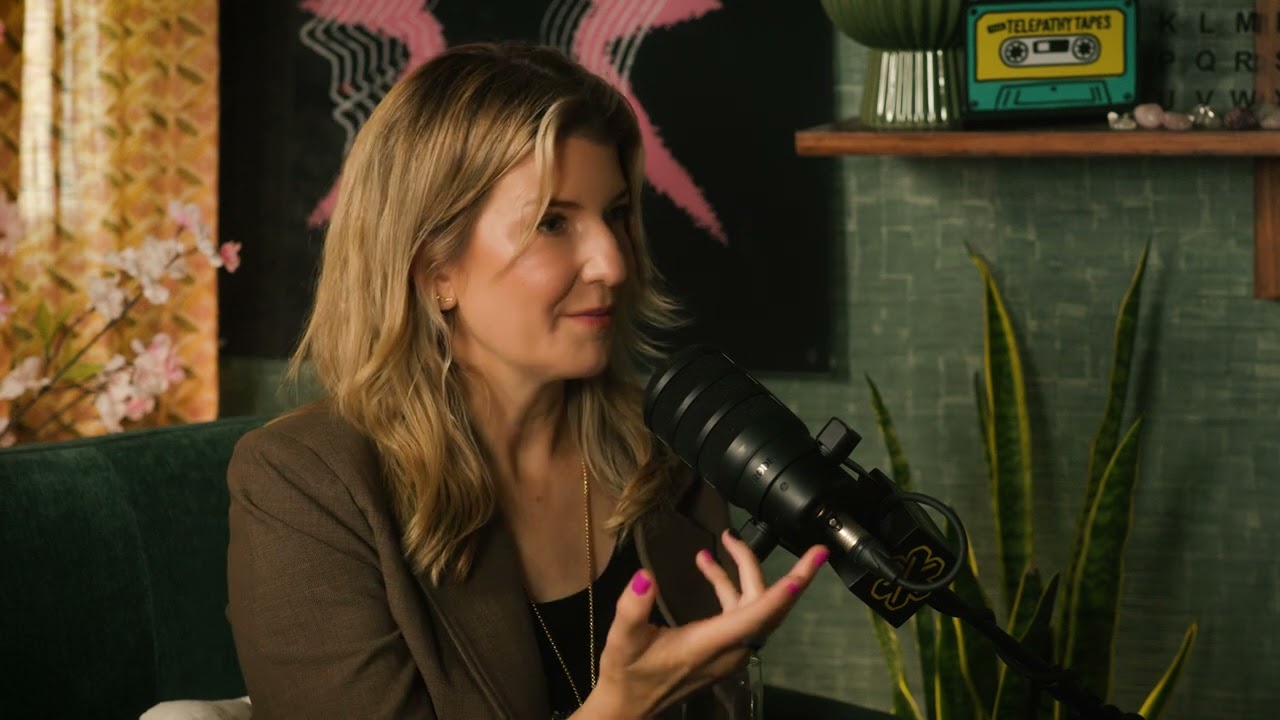
Dr. Martín Polanco - Full Interview on Ibogaine
The Telepathy Tapes Talk Tracks Season 2, hosted by Ky Dickens, features an interview with Dr. Martin Polanco, founder of The Mission Within, a Mexico-based clinic that treats veterans and first responders with ibogaine for PTSD, traumatic brain injury, and addiction. The conversation centers on ibogaine's origins as a compound derived from the iboga plant native to Central West Africa, its clinical and subjective effects, and Polanco's case for moving it out of Schedule 1 status in the US. The extracted material shows no explicit disagreement between host and guest; the discussion is structured as host questions and guest answers, with Polanco recounting his personal history, clinical claims, and views on trauma and consciousness. Ibogaine's illegal status in the US and its cardiac risks are raised as ongoing safety concerns the guest addresses through screening protocols rather than as a point of contention with the host.
The episode is an interview on The Telepathy Tapes Talk Tracks Season 2, hosted by Ky Dickens, featuring Dr. Martin Polanco, founder of The Mission Within, discussing ibogaine as a treatment for PTSD, traumatic brain injury, and addiction.
- An opening disclaimer, not attributable to a specific speaker, states ibogaine is a powerful psychoactive substance that is not legal in the United States and can be dangerous when administered improperly.
- The guest, Dr. Martin Polanco, says he is a physician from Mexico who has worked with ibogaine for 26 years, stated without further evidence given [00:02:20].
- The guest says veterans and first responders in The Mission Within program report a 90% success rate overcoming PTSD symptoms, stated without a specific study cited at that point [00:01:15].
- The guest explains that ibogaine, the single molecule, relates to iboga, the root bark, the way THC relates to marijuana [00:13:46].
+ 14 more takeaways
- The guest says the main difference between doing iboga versus ibogaine is the length of the experience, with iboga lasting a lot longer [00:18:13].
- The guest cites a Stanford Medicine study finding that ibogaine safely improved depression, anxiety, and functioning in veterans with traumatic brain injuries, and showed increases in brain white matter after a single treatment [00:10:41].
- The guest says the clinic has treated over 1,500 veterans with ibogaine since 2015, plus thousands more through earlier addiction programs [00:24:46].
- The guest claims that for opioid addiction, ibogaine eliminated about 90% of withdrawal symptoms over three days in actively using patients, unlike substitution drugs like Suboxone or methadone which create their own dependency [00:27:30].
- The guest says his clinic's research shows a 90% reduction in PTSD at the two-month mark, meaning participants practically no longer meet diagnostic criteria for PTSD, stated without a named published source in these points.
- The guest says ibogaine works on about 50 different nerve receptor systems, resets serotonin and dopamine transporters, and acts on sigma and NMDA receptors, and separately says it stimulates BDNF to help the brain repair, both stated without independent evidence cited [00:44:19, 00:44:36].
- The guest recounts that pharmaceutical companies declined to fund larger ibogaine trials after early research by Howard Lotsof and Dr. Deborah Mash before 1994, because ibogaine does not fit a repeat-dosing profit model [00:22:06].
- The guest states his goal is to move ibogaine out of Schedule 1 classification in the US, arguing it has no abuse potential and real medical use for PTSD, traumatic brain injury, and addiction [00:52:23].
- The guest says a common surprising theme is that veterans expect ibogaine to surface wartime trauma but it often surfaces childhood trauma instead, which he says drives enlistment and behavior patterns [00:32:31].
- The guest says he has observed people in the same room exchanging information telepathically during their ibogaine journeys, confirming details about each other's childhood experiences despite not knowing each other, stated without independent evidence given [00:43:17].
- The guest closes by describing ibogaine as a window of opportunity, not a cure, that provides time for a person to work on themselves [00:53:24].
- The extracted points show no explicit disagreement or pushback from the host; the conversation is presented as host questions and guest answers without a stated point of contention.
- Quotable: the episode's sponsor segment includes the tagline "Open the box to open your mind" for Schedule 35 [00:00:26].
- Quotable: Schedule 35 is described in the episode as "the most trusted name in psilocybin products" [00:14:24].
How this brief was shaped: Discourse (interview / podcast / video essay) · confidence Low
Host interviews a named guest (Dr. Martin Pol) about ibogaine, with the transcript giving explanatory analogies (iboga vs THC) and a research citation on screen, but the sampled evidence is thin on any argued thesis versus straightforward Q&A exchange.
The lens sets this brief's structure, never its facts — every claim is held to the same citation and fact-check standard.