This Star Reversed Its Death in Just 30 Years (Sakurai's Object)
Sakurai's Object (V4334 Sagittarii) is a white dwarf that unexpectedly reignited and swelled back into a giant star in the 1990s, a rare 'born-again' event that normally takes hundreds of thousands of years but unfolded here in about 30. Discovered by amateur astronomer Yukio Sakurai in 1996, it quickly hid itself behind self-made carbon dust, then reappeared by 2026 as a carbon-rich Wolf-Rayet star. Recent ALMA observations found an unexpected dust disk and high-speed bipolar jets instead of the spherically symmetric explosion models predicted, and comparisons with the similar historical star V605 Aquilae hint at how it may evolve over the coming decades. The object offers a rare, fast-motion look at stellar evolution that may preview the Sun's distant future and that likely produced carbon and oxygen now found in us.
Sakurai's Object (V4334 Sagittarii), in Sagittarius, is a white dwarf that reversed course and re-expanded into a giant star, a rare 'born-again' event [00:19]
- Modern theories suggest roughly 25% of white dwarfs undergo this extra disruption, forming a thin helium and hydrogen shell on the surface [04:21]
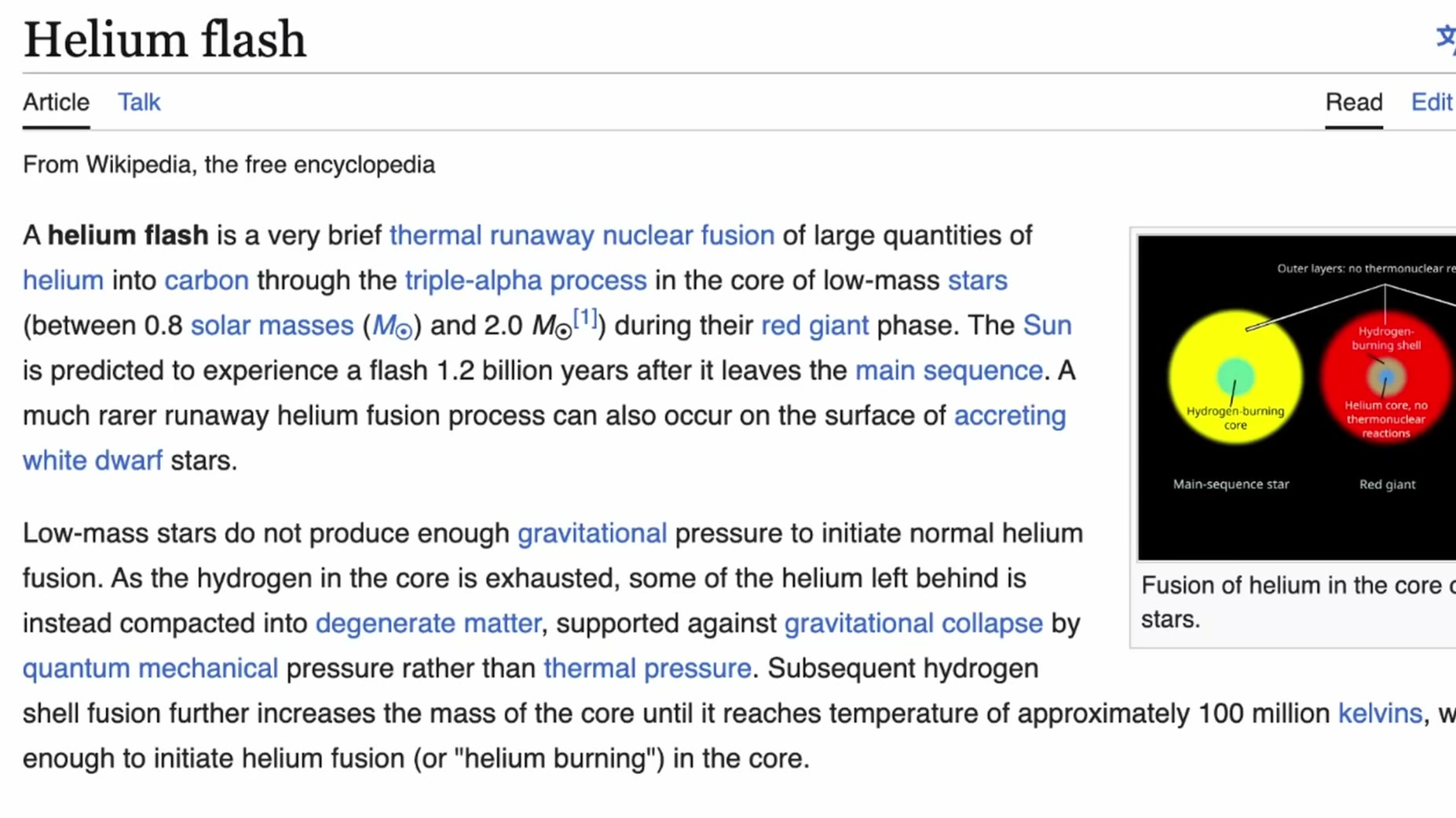
- That helium shell ignites at about 100 million Kelvin in a 'helium flash,' swelling the star to thousands of times its size within a few years [05:23]
- Only two, arguably three, such born-again stars have ever been directly observed in the galaxy [06:25]
- Japanese amateur astronomer Yukio Sakurai discovered the star brightening in February 1996 [08:21]
+ 7 more takeaways
- Between 1995 and 1997 its luminosity rose about 100 times while surface temperature dropped from 100,000 K to about 6,000 K [08:46]
- Starting in 1998 the star's own ejected carbon condensed into dust, dimming it from 11th to 21st magnitude within a year [09:20]
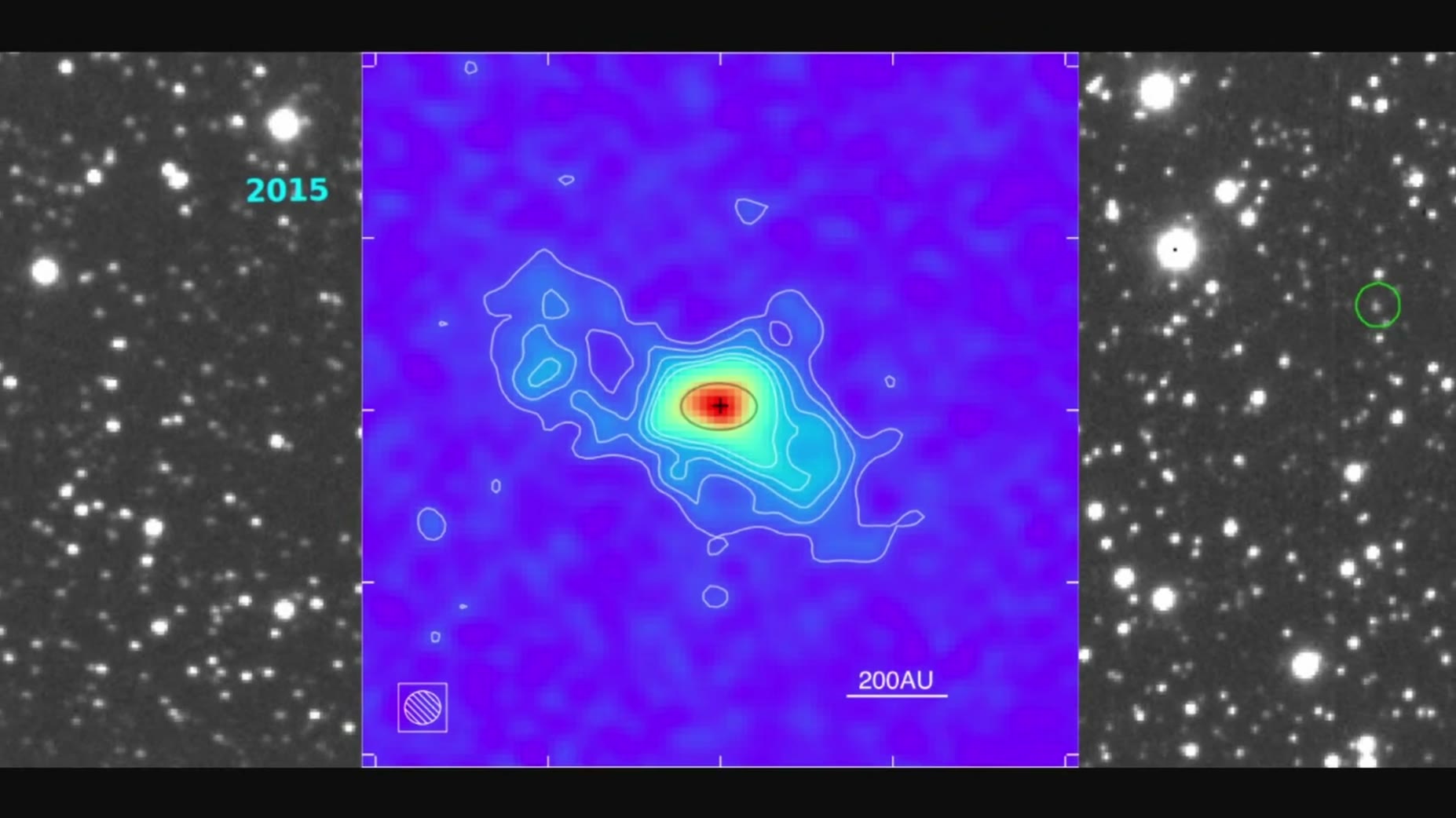
- In 2023 ALMA imaging (Tafoya et al.) revealed a compact central dust disk 277 AU in radius made of carbon dust at about 217 Kelvin, tilted about 72 degrees, explaining why the star was hidden [10:41]
- The same data showed bipolar jets moving at up to 1,000 km/s in an hourglass shape, unlike the spherical explosion standard models predicted [11:12]
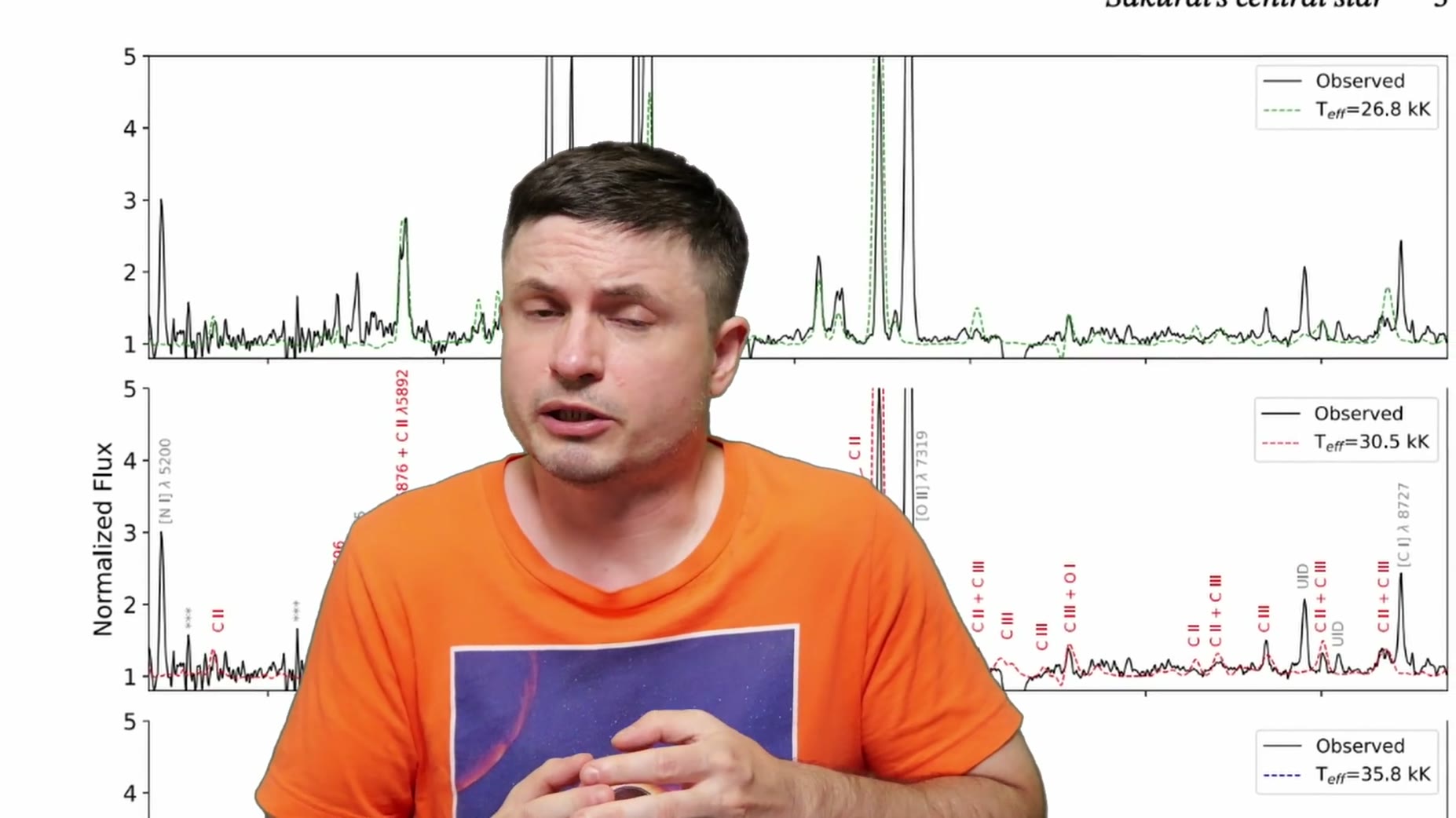
- A 2026 study found the star has reemerged, now classified as a carbon-type Wolf-Rayet star with surface temperature around 27,000 K, winds of 500 km/s, and mass loss of about one millionth of a solar mass per year [14:28]
- Its reheating is slower than predicted (expected 90,000 K), implying a mass of about 0.58 solar masses [15:09]
- The presenter notes this may preview what could happen to the Sun in roughly 8 billion years, and that similar events likely produced much of the carbon and oxygen found in us [17:51]