
First Ever Microblazar Found! Here's What This Means for Astronomy
What this video is
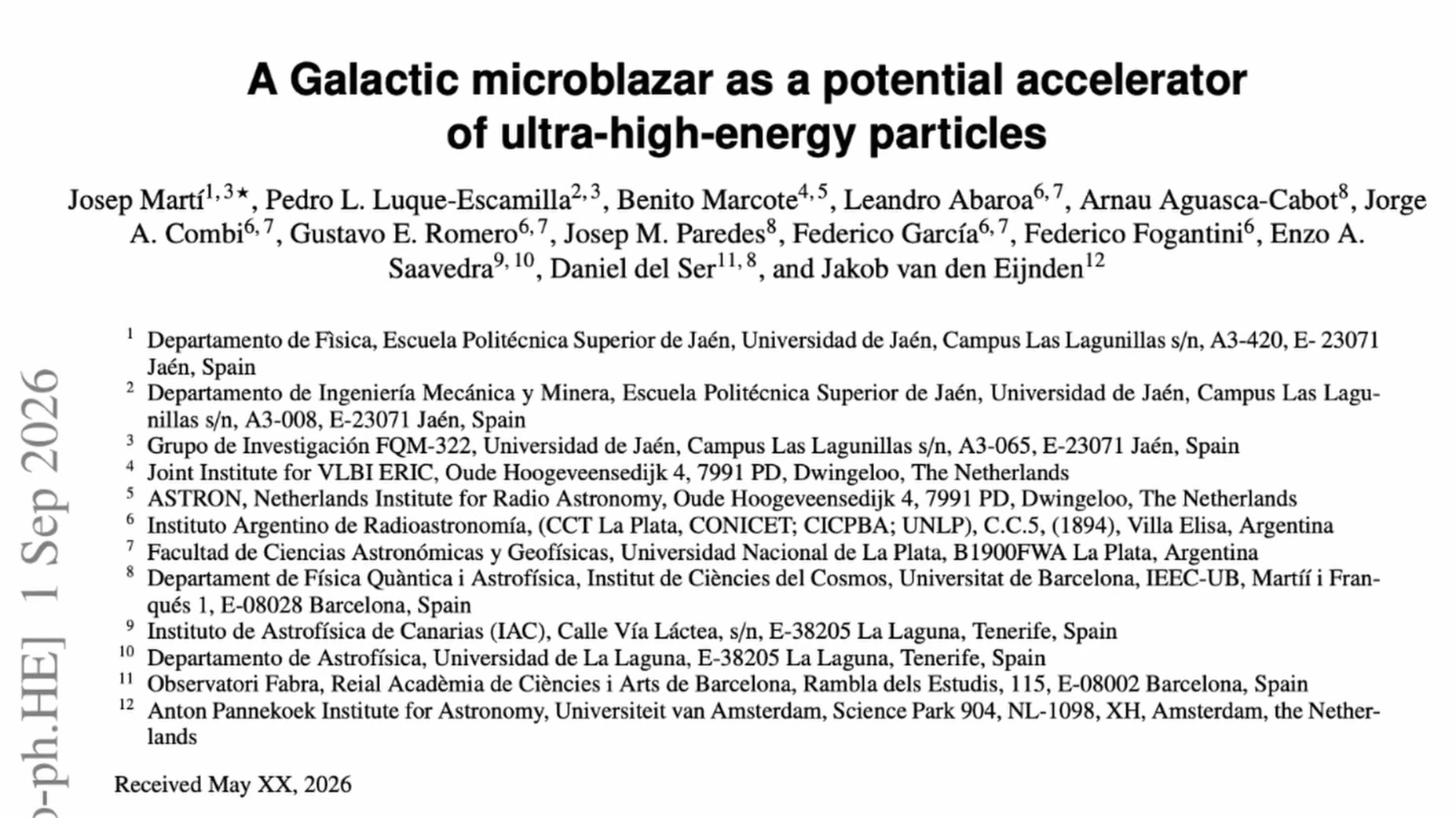
⚡ a 16-minute video, readable in 60 secondsIn 2026, astronomers confirmed the first persistent galactic microblazar, IRS 18293-0941, a binary system about 12,000 light years away whose jet points directly at Earth, fulfilling a nearly 30-year-old theoretical prediction. Its hidden counter-jet is slamming into a gas cloud roughly 100 light years away, producing a massive radio cocoon and ultra-high-energy gamma rays detected by LHAASO, HAWC, and Fermi. This gives direct observational proof that black hole jets striking interstellar clouds can accelerate particles to PeV energies, making the object a PeVatron. Because it sits so close by, it offers a rare nearby laboratory for studying jet and accretion physics on timescales of days to months.
[00:56] First-ever persistent galactic microblazar confirmed and named IRS 18293-0941, located about 12,000 light years away in Aquila [00:49]
Key takeaways
- [01:09] It is a binary system with a massive remnant and a companion star orbiting every 11.4 days
- [01:24] One powerful jet points directly at Earth
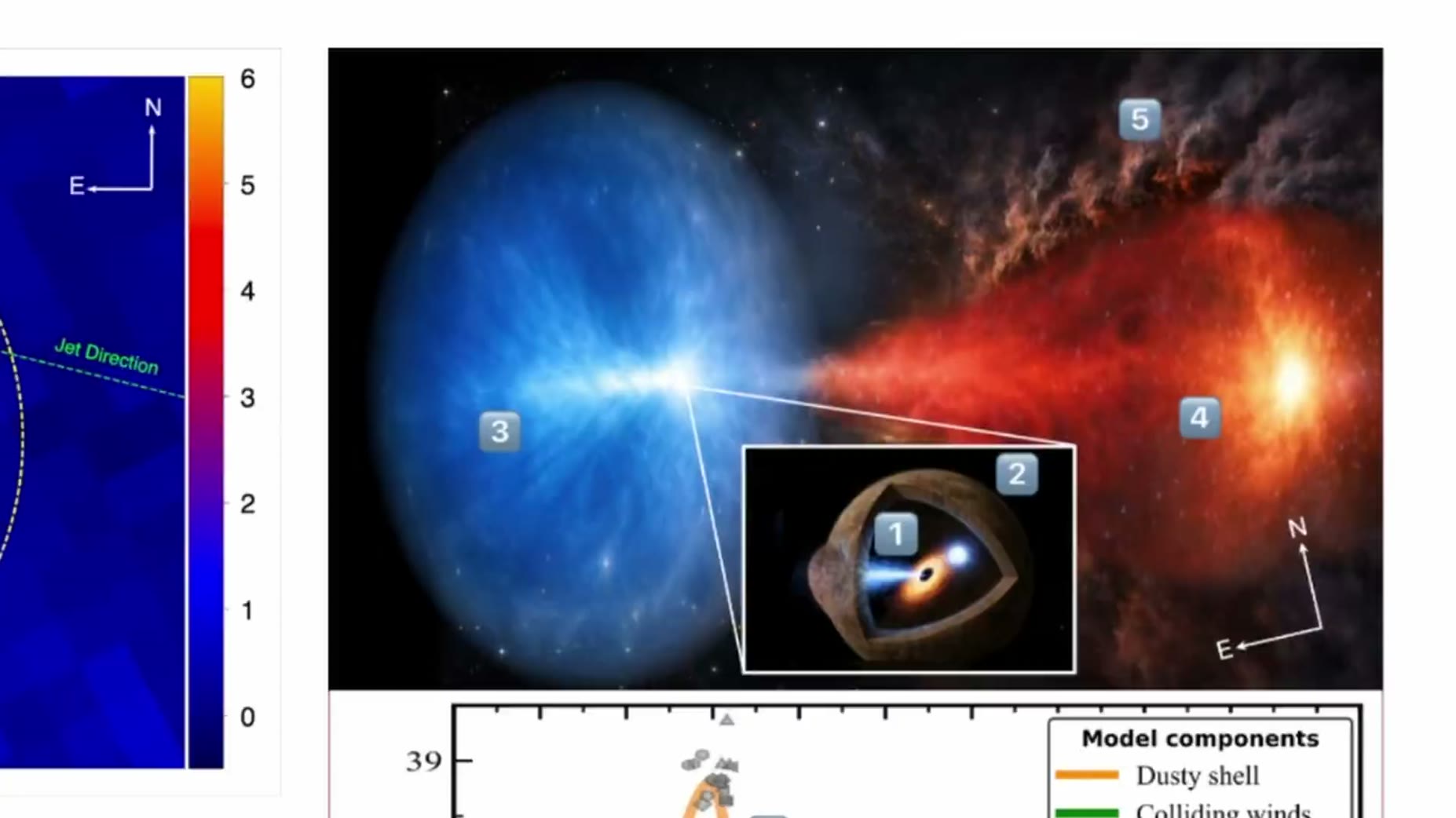
- [01:37] The second, normally invisible jet is interacting with something 100 light years away, producing effects never before detected in the galaxy
- [05:25] Theoretical astrophysicists predicted microblazars back in the 1990s, but confirming one proved difficult for decades [05:38]
+ 7 more takeaways
- [07:42] Infrared/optical spectroscopy showed the companion star's stellar winds form a dense dusty envelope that absorbs short-timescale radiation, explaining the object's lack of optical flickering
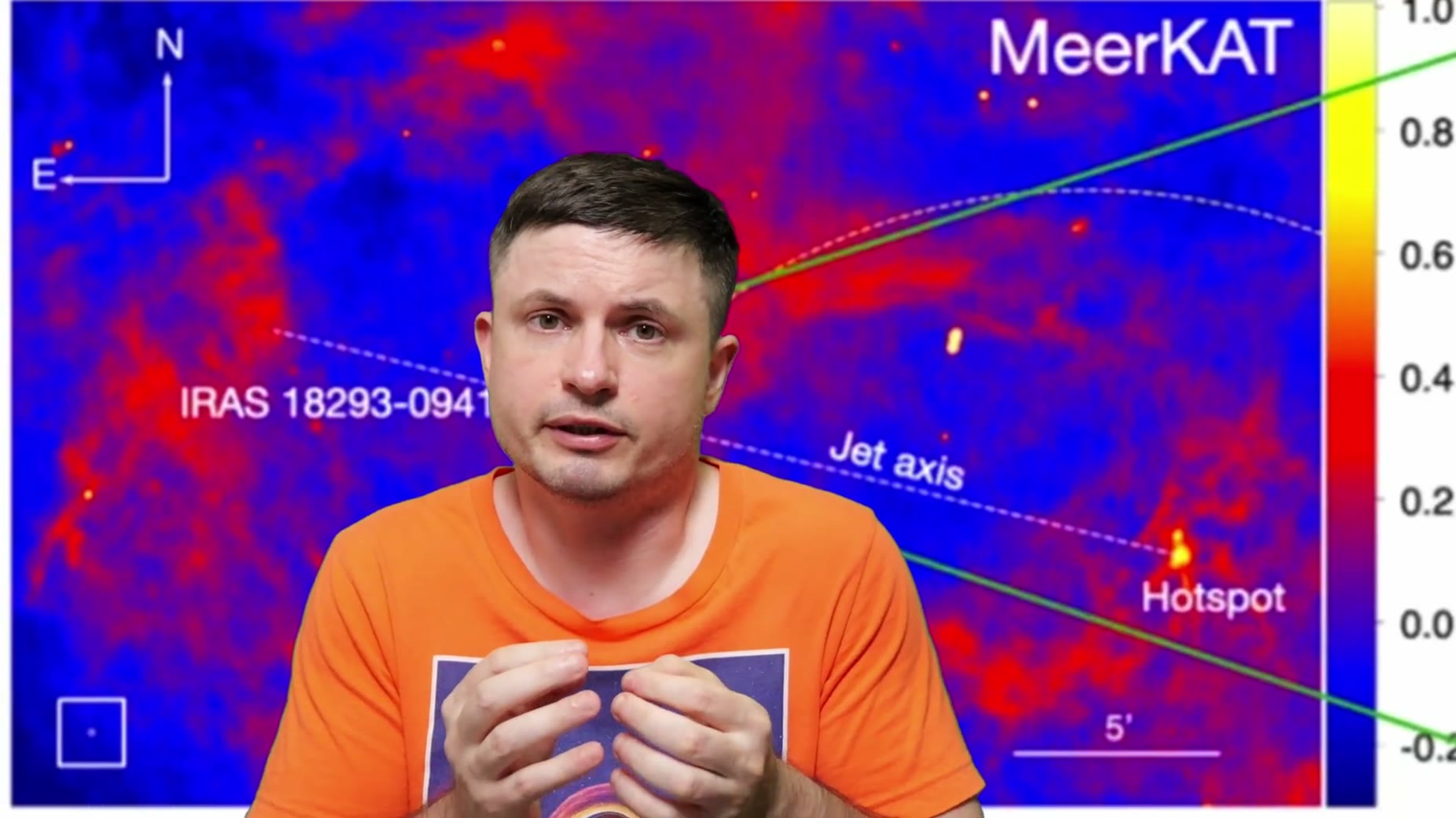
- [08:33] Archival Very Large Array and European VLBI network data showed only a one-sided jet over several years of monitoring, confirming the Doppler-suppressed counter-jet
- [09:35] MeerKAT radio observations revealed a 100 light year wide radio cocoon with an intense hotspot on the receding side, tens of light years away
- [10:12] A jet carrying half a million times the Sun's total energy output is punching into a gas cloud, producing a powerful shockwave at the hotspot
- [10:39] LHAASO, HAWC, and Fermi detected ultra-high energy gamma rays exceeding 100 tera electron volts from that location, about 10 times more energetic than Earth-based particle accelerators produce
- [11:04] The object is classified as a PeVatron, capable of accelerating particles to peta electron volt energies
- [13:33] Because the object is close and its processes play out quickly, it serves as a scaled-down laboratory to directly monitor jet dynamics and accretion physics in near real time
Jump to a moment
0:00First ever discovery of a microblazar2:10What are quasars, blazars and microquasars?4:45Hypothetical microblazars5:50First confirmation, but why did it take so long to find?9:10Bizarre discoveries of a counter jet and a cocoon effects10:30Explains a major mystery - PeVatrons12:40Implications and conclusions
Their links, sorted & clickable
🏛️ Communities & courses1
Support this channel on Patreon to help me make this a full time jobWas this brief useful?