Why Hasn’t Iran’s Economy Collapsed?
The video reports that after US airstrikes failed to force Iranian capitulation, the Trump administration shifted to economic coercion, imposing a naval blockade on Iran's ports plus fresh sanctions to pressure concessions. Citing the IMF and Iran's Statistical Centre, it reports steep damage: the IMF projects a 5.4% GDP contraction this year (the sharpest since the 1980s Iran-Iraq war), Iran's own statistics agency recorded a 10.1% year-on-year GDP drop in the first Persian-calendar quarter, inflation near 90%, and the rial collapsing to about 2.6 million per dollar, yet the video reports the regime has shown little interest in further concessions. The creator argues this is because Iran's state can shift the economic burden onto ordinary Iranians through currency devaluation and inflation, and because sanctions historically lose bite over time as Iran engineers workarounds; in their view, the current pressure campaign is therefore unlikely to change Iranian strategy going forward.
Confirmed: [00:11] The US imposed a naval blockade on everything entering or leaving Iran's ports, plus fresh sanctions, aiming to damage the economy enough to force concessions.
- Confirmed: [00:31] Iran's currency, the rial, has cratered against the dollar.
- Confirmed: [00:34] Inflation in Iran has spiked to a record high of about 90%.
- Source cited: [00:38] The IMF said in July it expects Iran's economy to contract by 5.4% this year, the sharpest contraction since the Iran-Iraq war in the 1980s.
- Source cited: [00:50] Iran's Statistical Centre reported GDP shrank 10.1% year on year between March 21 and June 20, the first quarter of the Persian calendar.
+ 29 more takeaways
- Confirmed: [00:58] Crude oil and natural gas activity contracted 26.4% year on year.
- Confirmed: [00:58] GDP excluding oil fell 4.6% year on year.
- Confirmed: [00:58] Industry and mining output contracted 14.7% year on year.
- Confirmed: [00:58] Services output declined 4.8% year on year.
- Confirmed: [00:58] Manufacturing output contracted 2.5% year on year.
- Confirmed: [01:01] Despite this economic damage, the Iranian regime has shown little interest in making further concessions.
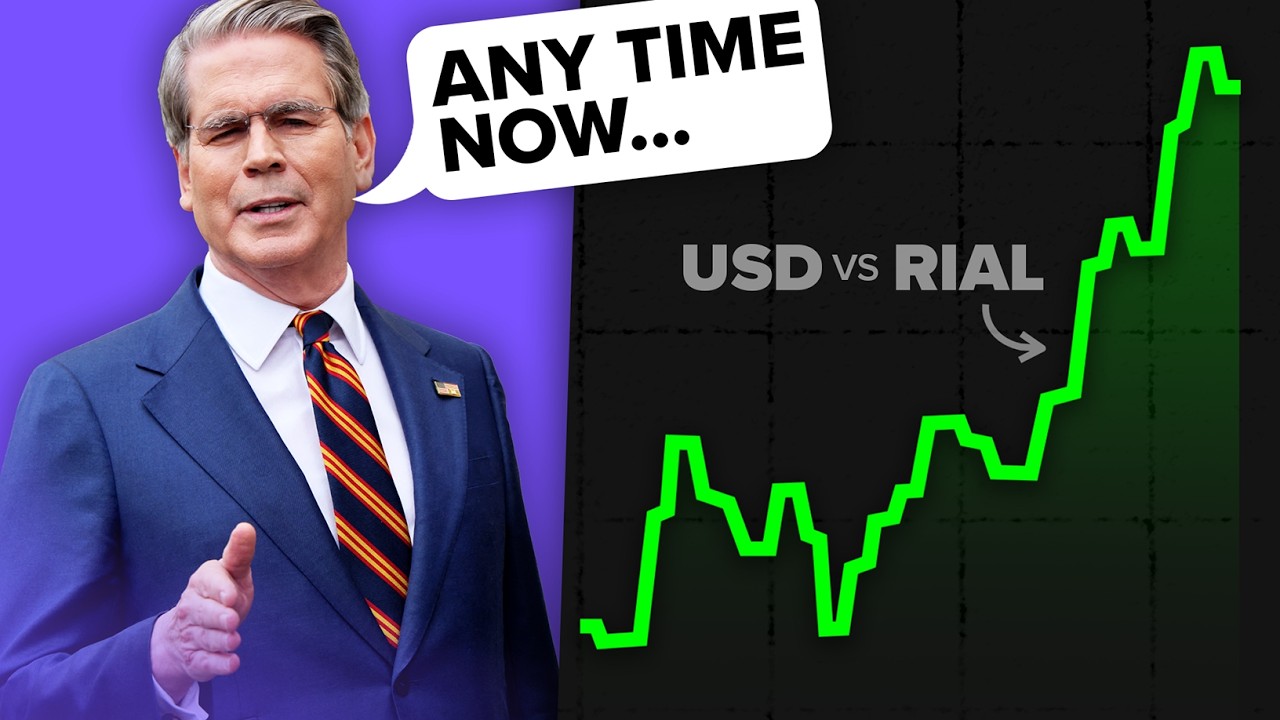
- Source cited: [02:08] Trump's defenders, including US Treasury Secretary Scott Bessent, cite the cratering rial exchange rate as proof sanctions are working.
- Confirmed: [02:22] The rial now trades at about 2.6 million to the dollar, down from about a million a year earlier.
- Confirmed: [02:36] The rial's exchange rate is not set by the free market but determined by Iran's central bank, which maintains multiple exchange rates.
- Take (creator): [01:48] The first reason the Iranian economy hasn't collapsed is that the Iranian state has become very good at transferring money and resources from the normal economy to the state itself.
- Take (creator): [01:59] This transfer makes life extra miserable for ordinary Iranians but lets the state keep pursuing its domestic and foreign policy goals.
- Take (creator): [03:03] The central bank can and does easily devalue the rial to transfer wealth away from the normal economy, since devaluation benefits exporters at the expense of importers.
- Confirmed: [03:21] In Iran the state controls most big export-oriented businesses, including the oil industry, while most households and small businesses are net importers.
- Take (creator): [03:32] This means devaluations materially benefit the state at the expense of the rest of the economy.
- Confirmed: [03:38] The December and January protests began with bazaar merchants protesting the central bank's decision to devalue the rial, believing it unfairly benefited well-connected exporters over import-dependent businesses.
- Take (creator): [04:00] Devaluations stoke inflation, which erodes living standards so Iranian households consume and import less.
- Take (creator): [04:07] Less consumption means more resources for the state to mobilize, and fewer imports reduce pressure on the rial.
- Take (creator): [04:29] Sanctions advocates often claim modern sanctions target political elites, but the creator says elites can usually shift the economic burden onto others, with evidence sanctions have hit poorer Iranians hardest.
- Take (creator): [05:00] The second reason the pressure campaign isn't working is that sanctions become less effective with time.
- Confirmed: [05:03] Iran has been under some form of US sanctions for nearly 30 years.
- Take (creator): [05:15] Each new round of sanctions usually causes temporary economic pain, but Iran's economy always eventually recovers once Iran and its allies engineer workarounds.
- Confirmed: [05:27] In 2018 Trump withdrew from the nuclear deal and imposed what he called maximum pressure sanctions, with oil exports falling toward zero, as in the current round.
- Confirmed: [05:45] Despite speculation about an impending economic crisis after the 2018 sanctions, an acute crisis never materialized and oil exports recovered by 2022.
- Confirmed: [06:04] Per filings on the Tehran Stock Exchange, the average industrial firm holds inventories that could last three months.
- Confirmed: [06:12] In sensitive sectors like electrical machinery, heavily targeted by past US sanctions, firms maintain inventories lasting nearly seven months.
- Confirmed: [06:09] A horizontal bar chart shown on screen, titled 'Days of Inventory Outstanding According to Company Filings (Dec 2025),' ranks industry sectors by inventory days.
- Take (creator): [06:21] Sanctions are genuinely painful, as shown by Iran's dismal economic record and officials' emphasis on sanctions relief.
- Prediction: [06:33] The creator predicts that since sanctions haven't caused economic collapse or a change in Iranian strategy so far, they likely won't in the future, because sanctions' efficacy wanes over time.
- Take (creator): [06:43] The creator argues the US has inflicted real and severe harm on Iran's economy, but it's unlikely to change Iranian policy since the burden has fallen on a public with little power to affect policy and one broadly supportive of the regime's war effort.
![Source cited: [00:38] The IMF said in July it expects Iran's economy to contract by 5.4% this year, the sharpest contrac](assets/lKbWxKUW3-M/frame_45.jpg)
![Source cited: [02:08] Trump's defenders, including US Treasury Secretary Scott Bessent, cite the cratering rial exchange](assets/lKbWxKUW3-M/frame_134.jpg)
![Confirmed: [06:09] A horizontal bar chart shown on screen, titled 'Days of Inventory Outstanding According to Company Fi](assets/lKbWxKUW3-M/frame_369.jpg)
How this brief was shaped: News Analysis / Commentary · confidence Medium
Transcript cites confirmed data points (rial crash to 2.6M/dollar, 90% inflation, IMF forecast of 5.4% contraction, government GDP data showing 10.1% shrink) then pivots into the creator's own argument for why Trump's economic coercion strategy is not actually working. OCR shows a dated news graphic (21 Sep 2026) laying out the same GDP and oil-sector figures, confirming the event layer the narration is analyzing against.
The lens sets this brief's structure, never its facts — every claim is held to the same citation and fact-check standard.