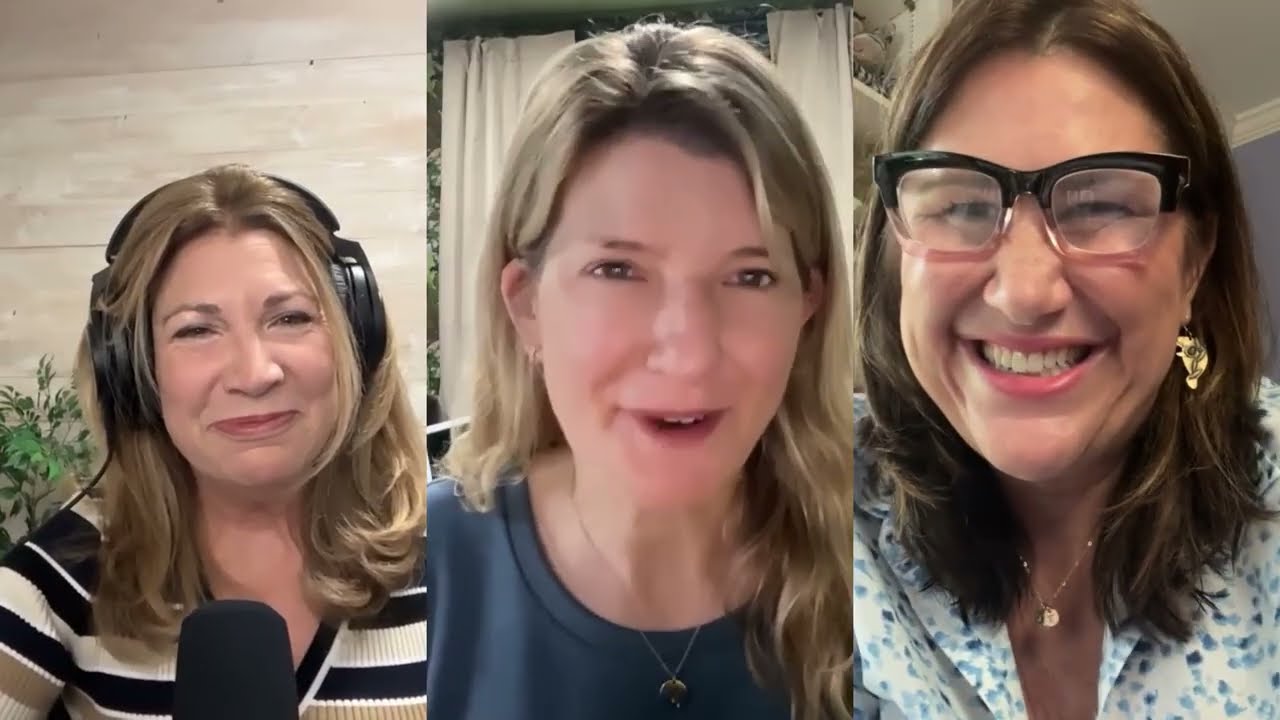
Ky Dickens' Journey | The Telepathy Tapes: Now What Ep 11
This interview features Kai Dickens, creator of The Telepathy Tapes podcast, in conversation with co-hosts, one of whom is identified as Libby Ingram, the mother of the late John Paul (JP), a non-speaking young man featured in the project. The discussion centers on how the podcast, after being rejected by every television network Kai pitched it to, grew into a globally popular show and is now being expanded into a documentary film about non-speaking individuals who report communicating through spelling and, in some cases, telepathy. Speakers describe the personal cost of the project, including financial strain, online trolling, and family strain, alongside its reception, including viral growth, a nonprofit, and an upcoming film release. External skepticism from networks, scientists, and critics runs through the piece as an unresolved tension the speakers do not claim to have settled.
The core subject is Kai Dickens, creator of The Telepathy Tapes podcast, discussing with co-hosts, including Libby Ingram, how the project grew from a rejected TV pitch into a global podcast and a forthcoming documentary about non-speaking individuals who communicate via spelling and telepathy.
- [02:18]-[02:20] Kai says the work does not feel like work to her, but feels like what she is supposed to be doing on this earth, stated without evidence given.
- [02:29]-[02:40] Kai describes receiving online trolling, including videos depicting smoke coming out of her ears and people wanting to attack her.
- [03:34]-[03:57] Kai says she started a board of non-speaking advisors and asked them directly whether they were ready for the ridicule and tension the project would bring.
- [04:00]-[04:09] Kai says the board gave a unanimous "keep going" response, after which she felt there was no turning back, comparing it to a train that has left the station.
+ 59 more takeaways
- [04:23]-[04:38] Co-host Libby Ingram says her late son JP said the project "has to be done" and that she feels she must carry on his mission.
- [05:05]-[05:09] Libby says she believes John Paul sends her signs telling her she is on the right path, stated without evidence given.
- [05:25]-[06:22] Kai says documentary filmmaking projects usually take two to three years, and that meeting non-speakers and their families revealed a huge injustice: how parents talk and think is often very different from what their non-speaker writes and types, which she calls a competence issue.
- [06:25] Kai says she has a brother on the spectrum and worked with kids with special needs, and her original college major was going to be special education, as context for why she took on the project.
- [06:43] Kai says she observed individuals saying things outside societal norms being dismissed even though they had nothing to gain from saying it, stated without further evidence given.
- [06:54] Kai says topics like telepathy, energy work, or talking to the other side often conflict with parents' religious beliefs, making the subject scary for families.
- [07:13] Kai describes the non-speakers she met as some of the most pure, wonderful, thoughtful, sensitive, loving, and wise individuals she's encountered.
- [08:57] Kai states this story could never have happened before the internet and social media existed, stated without evidence given.
- [09:06] Kai says she has always deeply cared about allyship, shaped by her time at a United Church of Christ in Chicago.
- [13:16] A co-host told Kai her storytelling was so beautiful it made people feel things they didn't know about before; the specific co-host is not clearly identifiable from the diarization.
- [14:14] Kai says most inbox messages she receives are from people who are sick, terminally ill, dying, or grieving, saying the podcast left them fully believing they and their loved ones will go on.
- [15:11] Libby recounts that one of the pre-interview questions was whether JP remembered before he was born, and JP said yes, he remembered being afraid he couldn't complete his mission.
- [15:21] Libby says JP spelled that his mission was "to help people love one another."
- [17:14] Kai says the stories were pulled into a six-part format and pitched to every network, and each rejected it, asking her to add a celebrity or a true crime element.
- [17:39] Kai says the final rejection came during a tough personal period marked by the writer's strike, the post-COVID industry collapse, and her wife being out of work.
- [17:56] Kai recalls collapsing in tears in the backyard after the final network "no" call, having spent all her money and time on the project.
- [18:06] Kai admits she had spent all their money and time and had begged her spouse not to make her get a job so she could finish the project.
- [18:22] Kai says for about two weeks her parents were calling her spouse and friends to check on her because she was stunned and despondent after the rejection.
- [18:53] Kai says a non-speaker named Amelia had predicted early on that the project would be huge on Apple, which later proved true.
- [19:24] Kai quotes her friend Rebecca telling her on a walk, "what God has in store for you is so much bigger than what you could imagine for yourself."
- [20:58] Kai says at about 4am, after surrendering the project to the universe, she got the idea it needed to be a podcast and that she didn't need anyone's help to make it.
- [21:20] Kai says scientists and families questioned how she could make a podcast about non-speakers who communicate via telepathy and spelling, calling it a terrible idea, marking one point of external skepticism toward the project.
- [22:32] Kai says after launch they had no social media, TikTok, or ads, yet early downloads reached a few thousand across countries including England and Australia.
- [23:35] Kai describes the pattern of the right people appearing at the right time as more than a coincidence, stated without evidence given.
- [24:26] Kai says the day she visited Libby's house, 32 people had gathered organically without any planning.
- [25:41] Marianne Harrington, a teacher, is said to have been writing about and witnessing this phenomenon for 40 years and to have worked with many different spellers.
- [26:06] Harrington reportedly said many non-speaking students describe their purpose as helping raise humanity's vibration and helping people love one another.
- [27:47] Kai recalls that on Christmas Eve 2024 the show became the number one podcast in the world, surpassing Joe Rogan.
- [27:59] Kai says the first major negative piece, a Substack blog by a scientist calling the story controversial, appeared around that same Christmas Eve moment, marking a specific instance of external skepticism.
- [28:30] Kai calls that period the most "shook" she had ever been, before later feeling more at ease with the criticism.
- [29:01] Kai says her father told her the bigger splash anything makes, the bigger the comeback against it will be, and to wait for the pendulum to settle in the middle on the right side.
- [30:04] Kai says after the controversy settled she decided to make the film, moving from the podcast into a documentary project.
- [30:18] Kai says her talent agent suggested she continue the podcast weekly and hire staff or add ads, which grew into a company with four employees and an office.
- [31:22] Kai says the next big initiative after the podcast and film is their nonprofit, TTT Education and Impact, a 501c3.
- [31:36] Kai says the nonprofit's goal is to give non-speakers grants to learn to spell, grant coaches who want to learn to spell, and create bigger grants for families to attend workshops like a SOMA.
- [32:07] Kai says they want the film to reach places like libraries, cruise ships, synagogues, and churches with panels to answer questions, and to use the film to activate policy change such as letters to school boards.
- [33:12] Kai says their nonprofit website for spelling grant applications will likely go live sometime in August.
- [33:58] Kai says her household is very open with her kids, who knew about pitches to HBO or Netflix and about the rejections that came in.
- [34:22] Kai quotes her daughter telling her, "I just think you're amazing and I love you no matter what."
- [34:49] Kai says she told her kids that if she was short or sad, it's not about them.
- [35:19] Kai quotes her seven-year-old son telling her, "Mom, this is not a telepathy test."
- [35:50] Kai says around age six, her daughter told friends playing Barbies that her three Barbies were non-speakers who communicate via telepathy, and offered to "speak the telepathy out loud."
- [36:47] Kai says her son surprised her at a non-speaker summer camp near his basketball camp, saying it was full of her friends and that he already tries to be inclusive and loving.
- [37:39] Kai quotes her daughter at Disneyland saying she was "letting thoughts back into my head" after trying to keep her mind clear and loving all day.
- [38:15] Kai says six non-speaking consultants worked on the film, informing story, the look of the hill, auras, and plant communication, which pushed the production over budget and over time.
- [45:15] Kai says a featured non-speaker did not have autism but had drowned as a baby, nearly two years old, and was left in a vegetative state.
- [45:28] Kai says the hospital told the parents he would never amount to anything and encouraged taking him off life support, then suggested institutionalizing him.
- [45:51] Kai says after his parents refused and kept him, he started spelling and said he has telepathy, can talk with the other side, and understands energy, describing a mission he chose for this life.
- [46:15] Kai says a two-part episode featured a girl named Soraya, currently in hospice care, born without a gene, who as her health declined developed gifts including telepathy, talking to the other side, understanding energy, and seeing angels.
- [46:47] Kai theorizes that when physical capabilities diminish, a non-physical part of a person fills up and awakens, citing similar reports from people with Alzheimer's or stroke as her supporting evidence.
- [48:24] Kai calls telepathy a "Trojan horse" to get the mainstream to care about non-speakers, since demonstrating spelling alone often didn't convince people the way telepathy demonstrations did.
- [49:44] Kai says the documentary is nearly finished, with only final color correction and a surround sound audio mix remaining, and has already been accepted into one major film festival.
- [50:16] Kai says the documentary's world premiere is expected between September this year and January next year.
- [50:16] Kai says wide streaming release is targeted for early 2027, likely February or March.
- [50:53] Kai says Will Arnett showed up at one of their test screenings in Los Angeles.
- [51:06] Kai says that test screening was a small group of about 30 people.
- [51:09] Kai says Will Arnett later talked about the film on the SmartList podcast with Amy Adams.
- External skepticism toward the project runs throughout the piece, including network executives who rejected the pitch unless a celebrity or true crime element was added, scientists and families who called a telepathy-and-spelling podcast a terrible idea, and a scientist's Substack post calling the story controversial; the speakers do not claim this skepticism has been resolved.
- [51:19] Kai says it's just the beginning and they're excited for where the project is headed.
How this brief was shaped: Discourse (interview / podcast / video essay) · confidence Medium
Opening frames this explicitly as an interview turning the microphone on Kai Dickens, creator of the Telepathy Tapes, and the 25% slice shows two speakers exchanging emotional recollections about a difficult production moment. This is a host-guest exchange with quotable reflections, not a procedure, product, or news event.
The lens sets this brief's structure, never its facts — every claim is held to the same citation and fact-check standard.