
4 Things Quietly Costing You Money in Claude Code
This video explains how to cut token costs when using Claude Code (Anthropic's coding assistant) by managing its prompt cache, covering both the monthly subscription plan and API pay-per-use billing. It walks through slash commands including /clear, /rename, /compact, /rewind, /model, /mcp, /context, /doctor, and /usage, plus CLAUDE.md, skills, subagents, connectors, and hooks as ways to reduce what gets re-read into context. The end state is checking /usage weekly to confirm token spend is dropping after applying four rules: stay on one model, keep going while the cache is fresh, clear the chat when a job is done, and skip /compact unless needed. The brief is built mostly from narration, with one OCR'd excerpt from an Anthropic engineering blog post about prompt cache hit-rate alerts; no on-screen demo of the commands themselves was captured.
Goal: Explain four token-saving tricks for using Claude Code, built around managing its prompt cache, covering monthly-plan and API pay-per-use billing.
- Prereqs: Claude Code already includes prompt caching and gets more token-efficient with each release, with no extra GitHub repos or add-ons needed.
- Note: On-screen code and commands are largely unavailable (narration only); the one OCR'd artifact is an Anthropic engineering blog excerpt referenced around [03:06]-[03:13].
- [00:37] Concept: A token is the unit Claude charges for, roughly the size of a short word; a monthly plan draws tokens from plan limits, while API usage charges tokens in dollars.
- [01:03] Trick: Start a fresh chat for each new job by typing /clear, which wipes the chat at zero cost, or /rename to save and find an old chat later in the sidebar.
+ 36 more takeaways
- Mechanism: Claude has no memory between messages, so every message resends the entire thread from the first message onward, and that full re-read is what gets charged as context.
- [02:10] Mechanism: Claude Code uses a cache, described as short-term memory, so only new messages need to be read while unchanged parts of the chat are remembered.
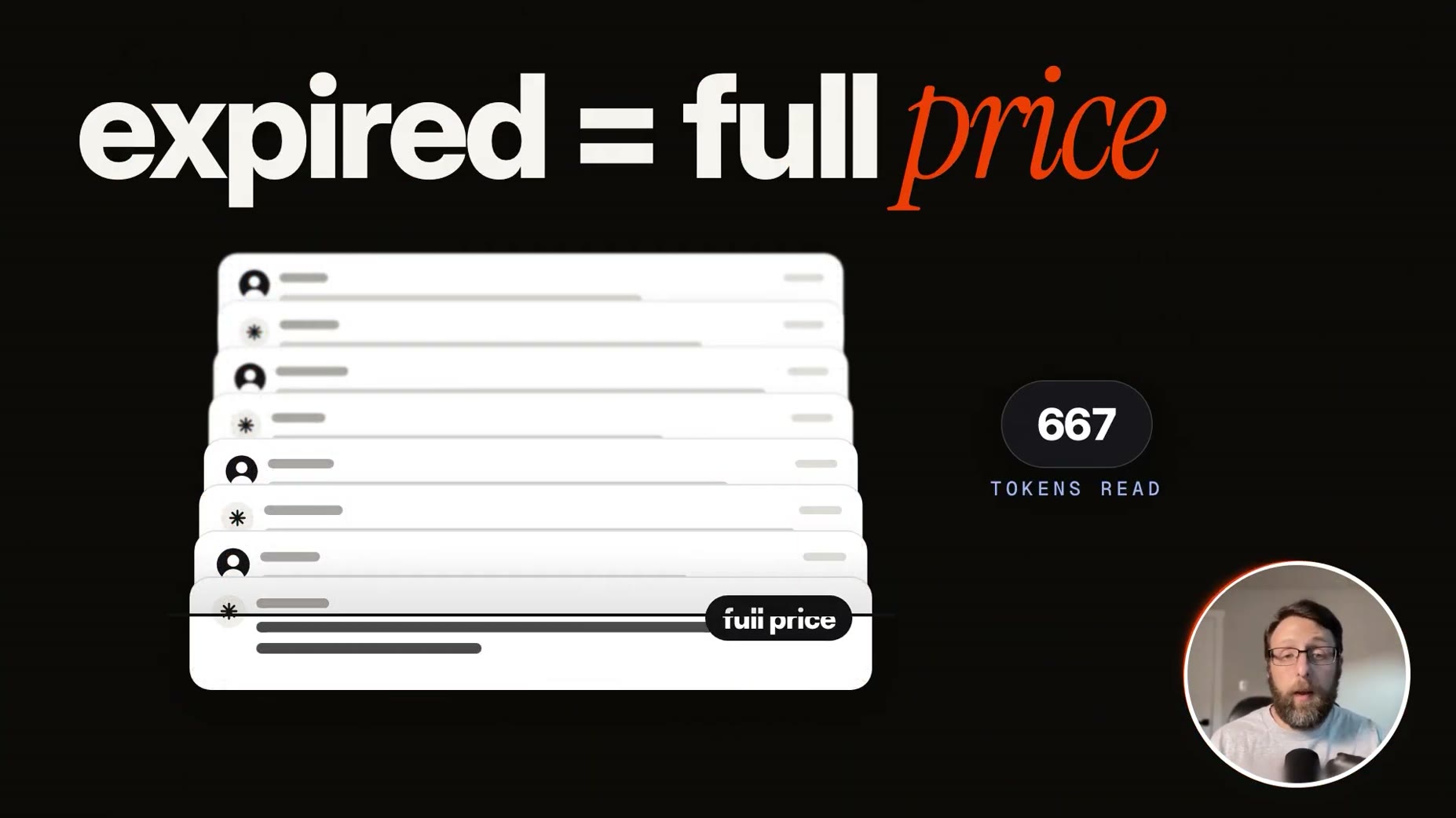
- [02:29] Mechanism: Reading from the cache costs a tenth of the normal price or less, but switching models (for example Sonnet to Opus) forces a full-price re-read of the whole chat.
- [02:50] Mechanism: The cache lasts about an hour on a monthly subscription plan, but only five minutes on API or pay-per-use billing.
- [03:06] Mechanism: Anthropic's Claude Code engineers get an alert when the prompt cache hit rate is too low.
- [03:13] Mechanism: Anthropic declares SEVs, treated like an outage, when the cache hit rate is too low.
- [03:24] Concept: A connector is how Claude plugs into an app like Slack or GitHub.
- [03:33] Mechanism: Claude Code doesn't load all of a connector's instructions at the start; it loads just the connector's name and pulls in the rest only when used.
- [03:58] Mechanism: For very long tool outputs, Claude Code cuts off the long result and saves the full thing in a separate file Claude can open later.
- [04:09] Concept: Subagents are helper chats that do messy work on their own, returning only a short summary to the main chat, used only for big jobs since they cost tokens too.
- [04:51] Command: /compact takes the whole chat, writes a short summary, and replaces the chat with that summary.
- [05:04] Pitfall: Writing the compact summary requires Claude to read the entire chat again as an extra request, cheap if the cache is fresh but full price if the cache has expired.
- [06:16] Mechanism: Claude Code auto-compacts on its own when the chat gets close to full.
- [06:22] Command: Use /clear when a job is done; use /rewind if Claude takes a wrong turn, which takes the chat back to before that turn.
- [06:34] Trick: For a heavy chat with unfinished work, ask Claude to write a handoff doc covering the goal, what's done, what's left, decisions made, and what didn't work, then run /clear and have the new chat read that file.
- [07:12] Pitfall: The cache expiring causes the next message after expiry to reread the entire chat at full price before the cache goes fresh again.
- [07:46] Mechanism: Recent versions of Claude Code compact a big chat that has been idle for close to an hour right before the cache expires, so on return Claude reads a short summary instead of the whole chat.
- [08:08] Pitfall: Switching models wipes the cache because each model (for example Opus, Sonnet) has its own cache, so switching from Opus to Sonnet mid-chat forces a full-price reread.
- [08:42] Command: Typing /model opus plan in plan mode makes Claude use Opus to build the plan, then switches to Sonnet for cheaper building, though every switch costs one full-price read.
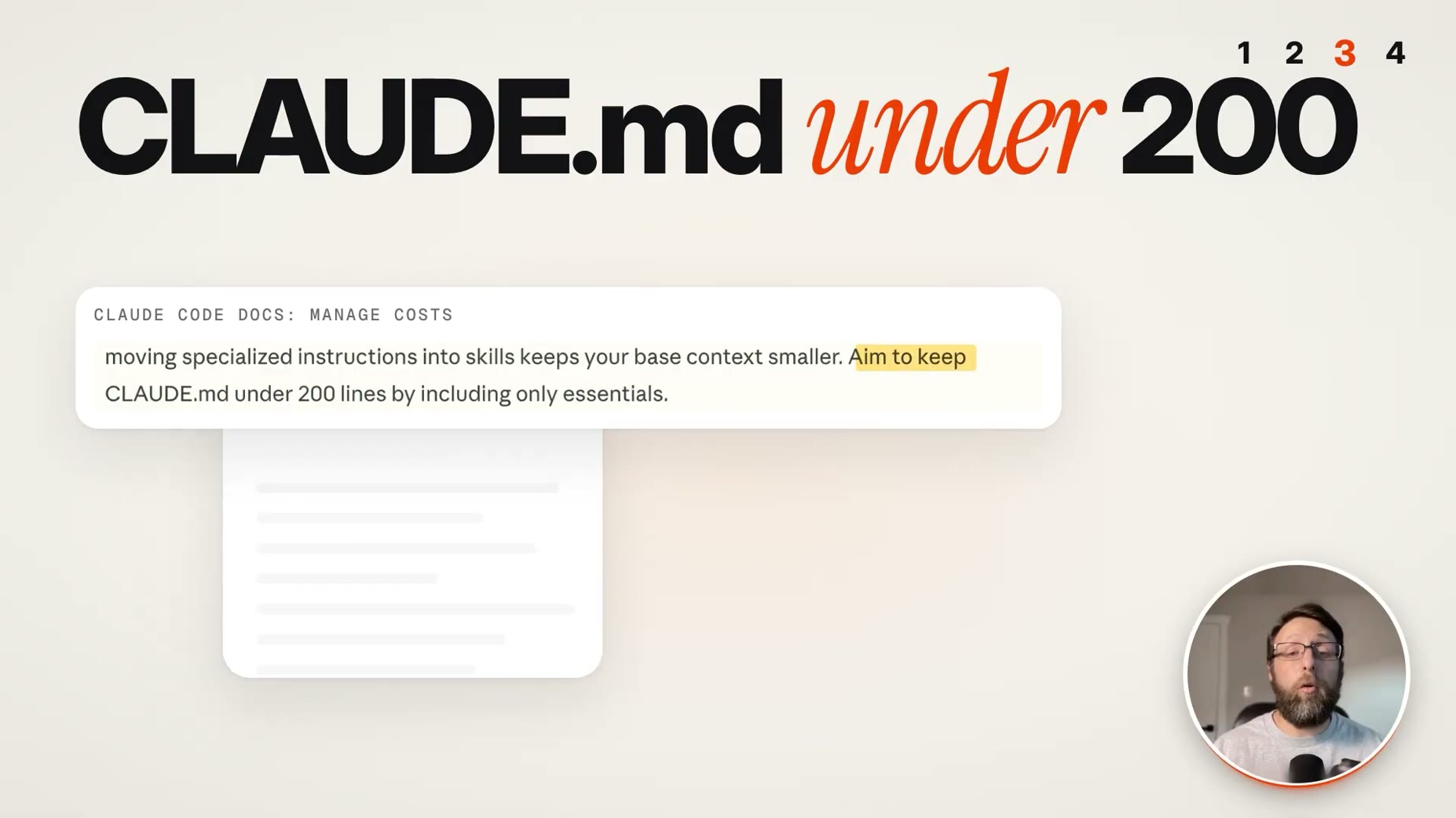
- [09:23] Rule: Anthropic's docs recommend keeping CLAUDE.md under 200 lines and moving specialized instructions into skills, since every cache expiry forces a full-price reread of all its lines.
- [09:53] Trick: CLAUDE.md should work like a tree trunk holding only the highest-level rules, with each branch a separate file for one kind of job that Claude only opens when needed.
- [10:15] Concept: A skill is a text file of step-by-step instructions that Claude only opens when it needs them; until then only a one-line description is loaded.
- [10:26] Concept: A skill can carry a script, a small program that does one job, so Claude never reads the code or every row, it only sees the result, like 42 sales up from 38.
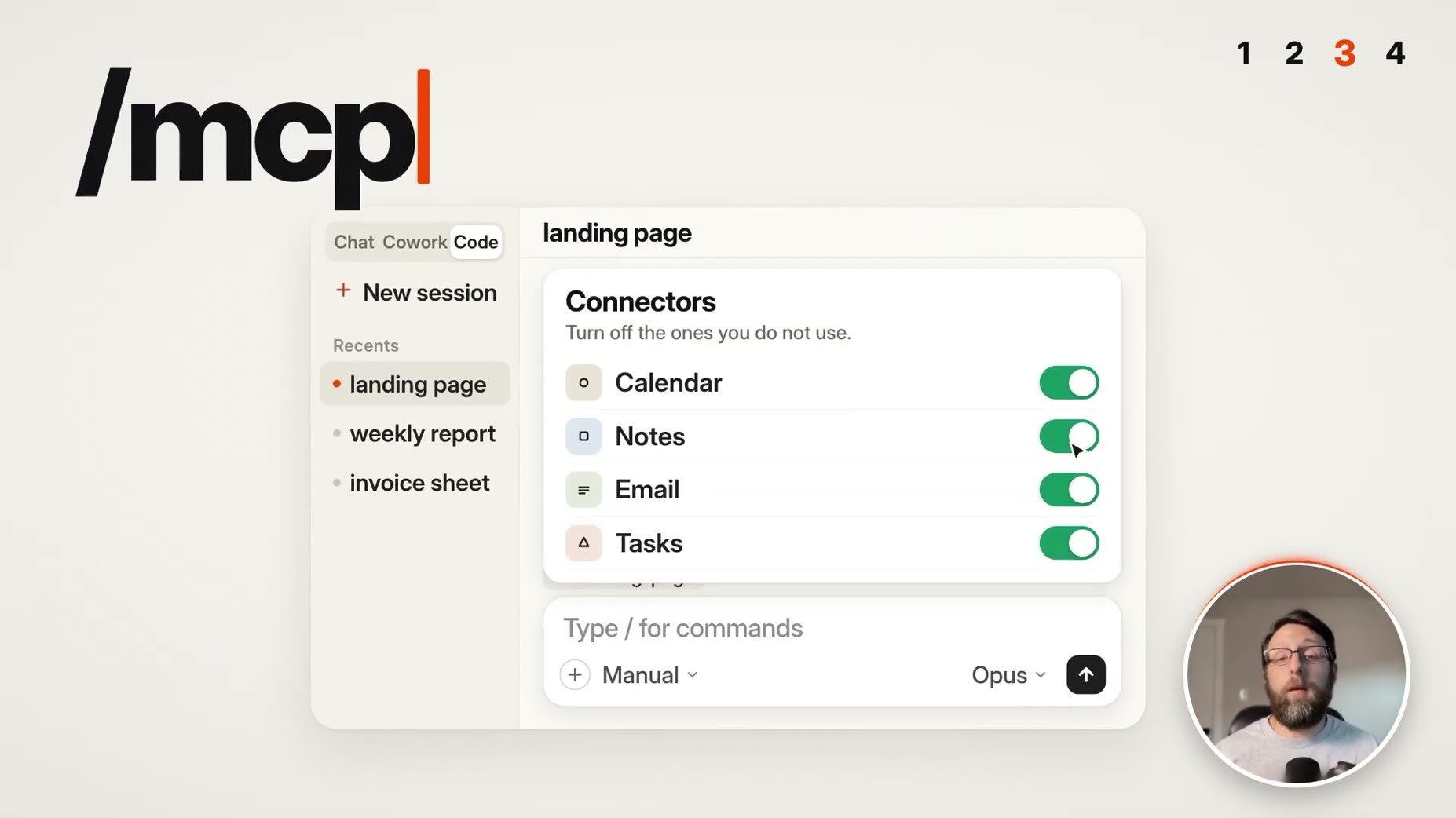
- [11:09] Command: Typing /mcp opens a Connectors settings panel so you can turn off connectors you aren't using, since each one adds a little to every session.
- [11:13] Command: /context shows what's taking up space in your chat.
- [11:13] Command: Running /doctor every so often checks your setup and flags problems.
- [11:48] Trick: For long test outputs, which Claude Code only cuts when results run much longer than hundreds of lines, the fix is a hook, a filter that trims results before Claude sees them, which you can ask Claude to write for you.
- [12:16] Pitfall: On a paid plan Claude Code defaults to Opus with thinking on, and since reasoning counts as output which costs five times more than input, running Opus on every job is like sending your best surgeon to take your temperature.
- [13:25] Pitfall: Compact, a model switch, a long CLAUDE.md, and a lunch break all add extra reading.
- [13:35] Rules: Stay on one model for the whole job, keep going while the cache is fresh, and clear your chat when the job is done.
- [13:43] Rule: If you pay per use, the cache window is only five minutes, so take breaks between jobs, not in the middle of one.
- [13:49] Rule: Skip /compact unless you really need the room.
- [13:55] Metric: /usage is the one number that tells you if the cache is working, showing what each chat, sub-agent, and connector actually used.
- [14:06] Final result: This week, type /usage, look at where your tokens went, then do the four things.
- [14:12] Final result: A week later, type /usage again; on a monthly plan a lower number means more room before you hit the limit, and on an API key it means a lower bill.
- [14:22] Note: The creator co-founded the Claude Code Club, a $9/month community with 8.1k members run by Duncan Rogoff, linked in the description.
At Claude Code, we build our entire harness around prompt caching. A high prompt cache hit rate decreases costs and helps us create more generous rate limits for our subscription plans, so we run alerts on our prompt cache hit rate and declare SEVs if they're too low. — Anthropic Engineering: Building Claude Code
Moving specialized instructions into skills keeps your base context smaller. Aim to keep CLAUDE.md under 200 lines by including only essentials. — Claude Code Docs: Manage Costs
Each model has its own cache. — Claude Code Docs: Prompt Caching
How this brief was shaped: Deep-Dive (coding / tutorial / how-to) · confidence Medium
A single narrator teaches four concrete token-saving techniques for Claude Code with step-by-step instructions like typing slash clear and using connectors, and OCR shows terminal slash-commands and an Anthropic engineering blog excerpt on prompt caching, matching a replicate-this tutorial rather than a workflow handoff or pure lecture.
The lens sets this brief's structure, never its facts — every claim is held to the same citation and fact-check standard.